
Truck Mounted Vacuum Systems for Cement Plants: Enhancing Dust Control, Safety, and Efficiency
On - 17 Feb 2026
By - Admin
Introduction
Cement manufacturing is inherently dust-intensive. From limestone crushing to clinker grinding and bulk loading, particulate generation is continuous and unavoidable. Uncontrolled dust accumulation not only impacts environmental compliance but also compromises equipment reliability, worker safety, and plant efficiency.
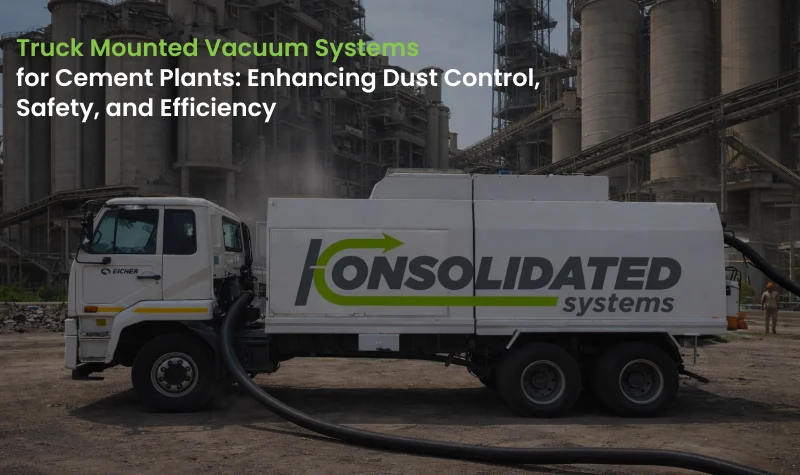
A Truck Mounted Vacuum System (SUPERVAC OR SUPER SUCKER) provides a mobile, high-capacity, heavy-duty solution for industrial cleaning, material recovery, and preventive maintenance in cement plants. It is engineered to handle large volumes of dry and semi-wet materials such as cement dust, fly ash, clinker fines, raw meal, and coal dust.
Why Cement Plants Need High-Capacity Vacuum Systems
Persistent Dust Generation
Key dust-prone areas include:
- Crusher house
- Raw mill and kiln section
- Clinker storage area
- Cement mill
- Packing plant and loading bay
- ESP & Baghouse zones
- Transfer points and conveyor galleries
Manual cleaning or small portable vacuums are insufficient for large-scale cement facilities. Accumulated dust leads to:
- Reduced equipment lifespan
- Increased fire/explosion risk (Flammable areas)
- Blocked conveyors and chutes
- Workplace health hazards
A truck-mounted system eliminates these challenges efficiently.
Key Applications In Cement Plants
1. Raw Material Handling Area
- Cleaning limestone dust near crushers
- Removing spillage under belt conveyors
- Recovering raw meal from floor pits
2. Kiln & Clinker Section
- Suction of clinker fines
- Cleaning around kiln inlet/outlet
- Dust removal during shutdown maintenance
3. Cement Mill & Packing Plant
- Cleaning cement spillage
- Recovering finished product dust
- Maintaining hygienic loading zones
4. ESP & Bag Filter Cleaning
- Safe suction of collected dust
- Cleaning hopper bottoms
- Removing accumulated powder from ducts
5. Coal & Fly Ash Handling
- Dust control in coal grinding areas
- Fly ash recovery from storage silos
Technical Capabilities Required For Cement Plants
| Parameter | Typical Requirement |
|---|---|
| Vacuum Type | Positive Displacement / Roots Blower |
| Airflow Capacity | 5,000 – 12,000 m³/hr |
| Vacuum Level | Up to 500–600 mbar |
| Tank Capacity | 6 – 12 m³ |
| Filtration | Multi-stage cyclonic + cartridge/bag filter |
| Discharge | Hydraulic tipping or reverse pressure |
Operational Advantages of Supervac
- Mobility Across Plant Zones
Unlike fixed vacuum systems, a SUPERVAC can move between departments—reducing capital expenditure on multiple installations. - Faster Shutdown Cleaning
During annual shutdowns, rapid dust removal significantly reduces downtime. - Material Recovery = Cost Saving
Recovered cement and raw material can often be reused, minimizing wastage. - Improved Safety Compliance
Supports compliance with:- Pollution control board norms
- Occupational health standards
- Fire and explosion safety protocols
Comparison: Manual Cleaning VS SUPERVAC
| Criteria | Manual Cleaning | Truck Mounted Vacuum |
|---|---|---|
| Time | Slow | 4–6x Faster |
| Labor | High | Low |
| Dust Re-Emission | High | Minimal to Negligible |
| Safety Risk | Elevated | Controlled |
| Material Recovery | Negligible | Significant |
ROI Justification in Cement Industry
A properly deployed SUPERVAC in a medium-to-large cement plant can:
- Reduce shutdown cleaning time by 30–40%
- Lower maintenance-related breakdowns
- Recover tons of reusable material annually
- Improve ESG & sustainability metrics
Return on investment typically occurs within 12–24 months depending on plant size and operating hours.
Environmental & ESG Impact
Cement is under global pressure to reduce emissions and environmental footprint. SUPERVAC contributes by:
- Preventing fugitive dust emissions
- Improving housekeeping standards
- Supporting zero-waste initiatives
- Enhancing audit compliance
Best Practices for Implementation
- Conduct dust mapping surveys.
- Define suction points and high-risk zones.
- Ensure adequate hose length (30–60 meters typical).
- Provide trained operators.
- Schedule periodic preventive maintenance of blowers & filters.
Conclusion
In modern cement manufacturing, housekeeping is not cosmetic—it is an operational strategy. A Truck Mounted Vacuum System transforms cleaning from reactive labour-intensive activity into a structured, efficient, and measurable process.
For cement plants focused on productivity, compliance, and long-term asset health, a high-capacity mobile vacuum system is no longer optional—it is essential industrial infrastructure.
Recent Posts
-
Truck mounted vacuum systems for cement plants: enhancing dust control, safety, and efficiency
Introduction Cement manufacturing is inherently dust-intensive. From limestone ...
Read more -

Truck mounted vacuum systems: applications across steel plants
Introduction Steel plants operate in some of the most demanding industrial envir...
Read more -
How to choose the right truck-mounted road vacuum sweeper
Maintaining clean roads and highways is essential for public health, safety, and...
Read more -
Revolutionizing road cleanliness: the role of industrial road sweepers
In today’s fast-paced world, ensuring roads remain clean and safe is essential f...
Read more